Press
Anillo Disonancias researchers participate in the International Seminar Fazendo Gênero in Brazil
The research team of the Anillo Disonancias Project was part of the International Seminar Fazendo Gênero, which took place between July 29 and August 2 at the Universidade Federal de Santa Catarina in Florianópolis, Brazil. During the event, the researchers presented four lectures and led the Thematic Symposium "Impact and approach of the feminist irruption in Latin American universities: nodes and critical reflections".
August 5, 2024
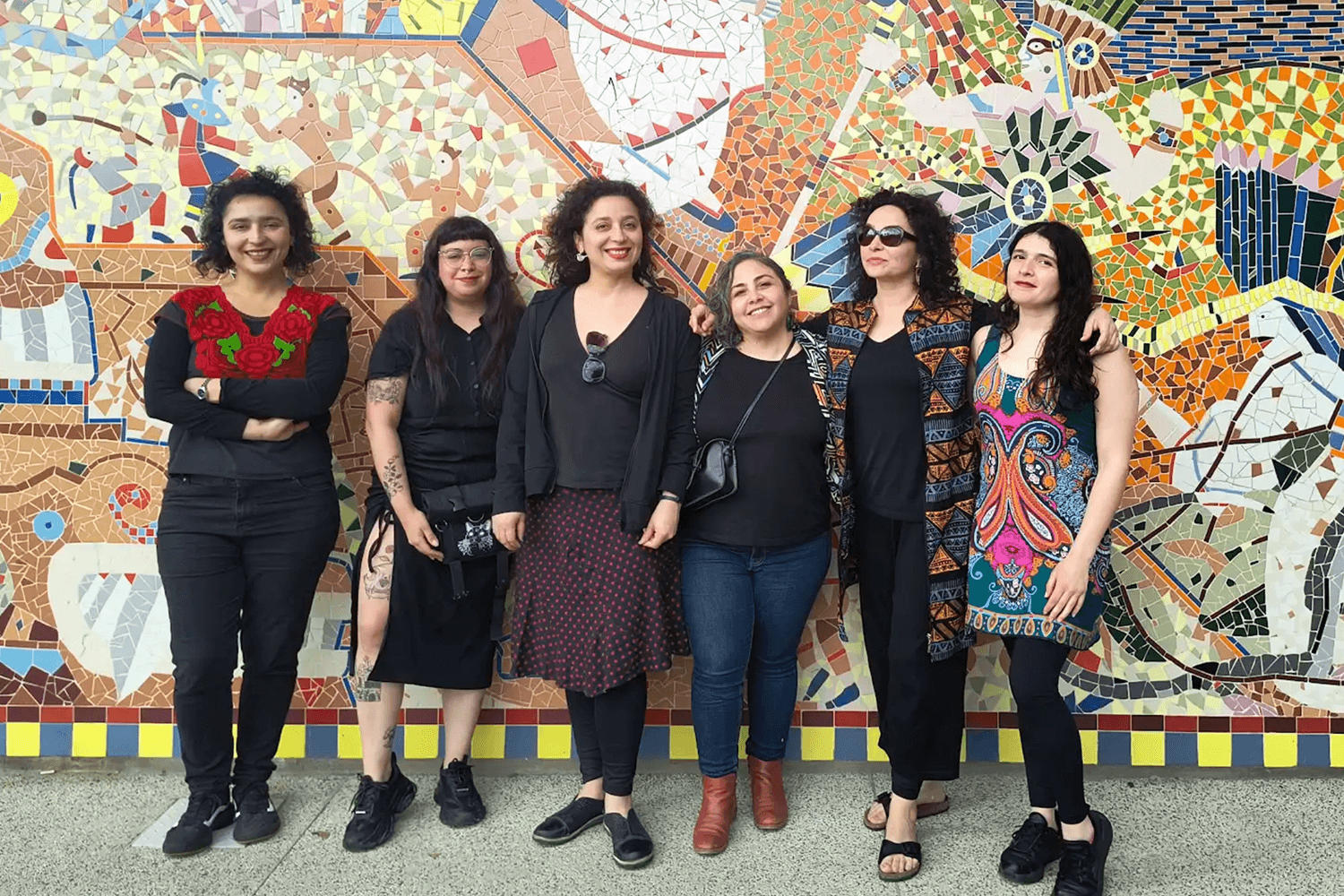
Researchers Sandra Vera, Tamara Vidaurrázaga, Antonieta Vera and Andrea Vera — director of the Anillo Disonancias Project — together with assistant researchers Daniela Lillo and Rocío Gallardo, participated in the International Seminar Fazendo Gênero 13, Against the end of the world: anti-colonialism, anti-fascism and climate justice. The seminar took place between July 29 and August 2 at the Universidade Federal de Santa Catarina in Florianópolis, Brazil.
"The participation of the Anillo Disonancias Project in Fazendo Gênero was a unique opportunity to make our work known and to share with scientists, artists and activists from Latin America and all over the world, in an interdisciplinary context which turned out to be very nurturing for our research", said Andrea Vera — director of the project.
During the event, the research team presented four lectures and led the Thematic Symposium Impact and approach of the feminist irruption in Latin American universities: nodes and critical reflections.
On July 29, Andrea Vera — Ph.D. in mathematics and academic at the Mathematics Institute of the Universidad de Valparaíso — presented her research "New questions in gender studies in STEM" at the Thematic Symposium Public policy, women, and scientific careers: intersectionalities and transversalities of the present time.
During the next day, the Thematic Symposium Impact and approach of the feminist irruption in Latin American universities: nodes and critical reflections was held. The conference was coordinate by Antonieta Vera — Ph.D. in political science with a major in gender studies and professor at the Department of Philosophy and the Center for Gender and Cultural Studies in Latin America at the Universidad de Chile—, Sandra Vera — Ph.D. in sociology and academic at the Faculty of Social Sciences and Education of the Universidad Academia de Humanismo Cristiano —, and Nicolás Cuello — Argentine historian and archivist.
"Participants from different countries and speakers from Chile and Argentina attended the Symposium, addressing the experience of installing gender policies in universities, the tensions faced by people working in University Centers for Gender and other issues related to the problematic nodes of the feminist irruption in society. Among them are discussions on punitivism, disagreements in feminism and the relation between anti-feminism and resistance, which can spread from society to universities", explains Sandra Vera — researcher of the Anillo Disonancias Project.
On August 2, Tamara Vidaurrázaga — Ph.D. in Latin American studies and academic at the Faculty of Political Science and Education of the Universidad Academia de Humanismo Cristiano — presented "The streets melt with rage. Discursive productions of feminist protest in the Chilean social uprising", as part of the Roundtable Affections, emotions, and feminism in Latin America.
Finally, Daniela Lillo — Ph.D. candidate in Interdisciplinary Studies on Thought, Culture and Society at the Universidad de Valparaíso — presented her research "Working meanings, discourses on domestic and care work in girls", as part of the Thematic Symposium Reproductive work in global society: dominations and resistances.
EIn 2024, the International Seminar Fazendo Gênero celebrated 30 years of academic, activist, artistic and emotional exchanges, also known for being the first face-to-face meeting since the pandemic. The studies presented in this edition show the plurality of challenges faced by women and the LGBTQ+ community, becoming a key platform for the promotion of their human rights.
Meanwhile, the Anillo Disonancias Project investigates the irruption of the feminist demands in higher education institutions in Chile, focusing on the challenges associated with implementing gender initiatives and policies, equality, and recognition of diversity. The project brings together Universidad de Valparaíso, Universidad Academia de Humanismo Cristiano and Universidad de Chile, and it is funded by the National Research and Development Agency (ANID).